
Canine Chiropractic
Helping dogs get back to moving freely and comfortably.
Meet Missy
Missy's owner approached me, having known me from working on many horses she knows. She explained how, for the past three months, Missy just hadn't been herself.
She was struggling to walk, to move and to sit, and had resorted to mainly lying on one side or the other, as her elbows wouldn't lock and slipped when sitting. She had been investigated and diagnosed by the vet, showing stenosis at L7–S1 with disc protrusions, and neurological findings at L4–S3.
Chiropractic never diagnoses and always works alongside the vet, as a non-invasive, safe, conservative form of care for improving function and reducing pain. Missy's vet rang me to discuss her. He explained that he had worked alongside some amazing chiropractors, had seen amazing results, and wanted conservative care to help Missy. Full permission was given for this emergency appointment.
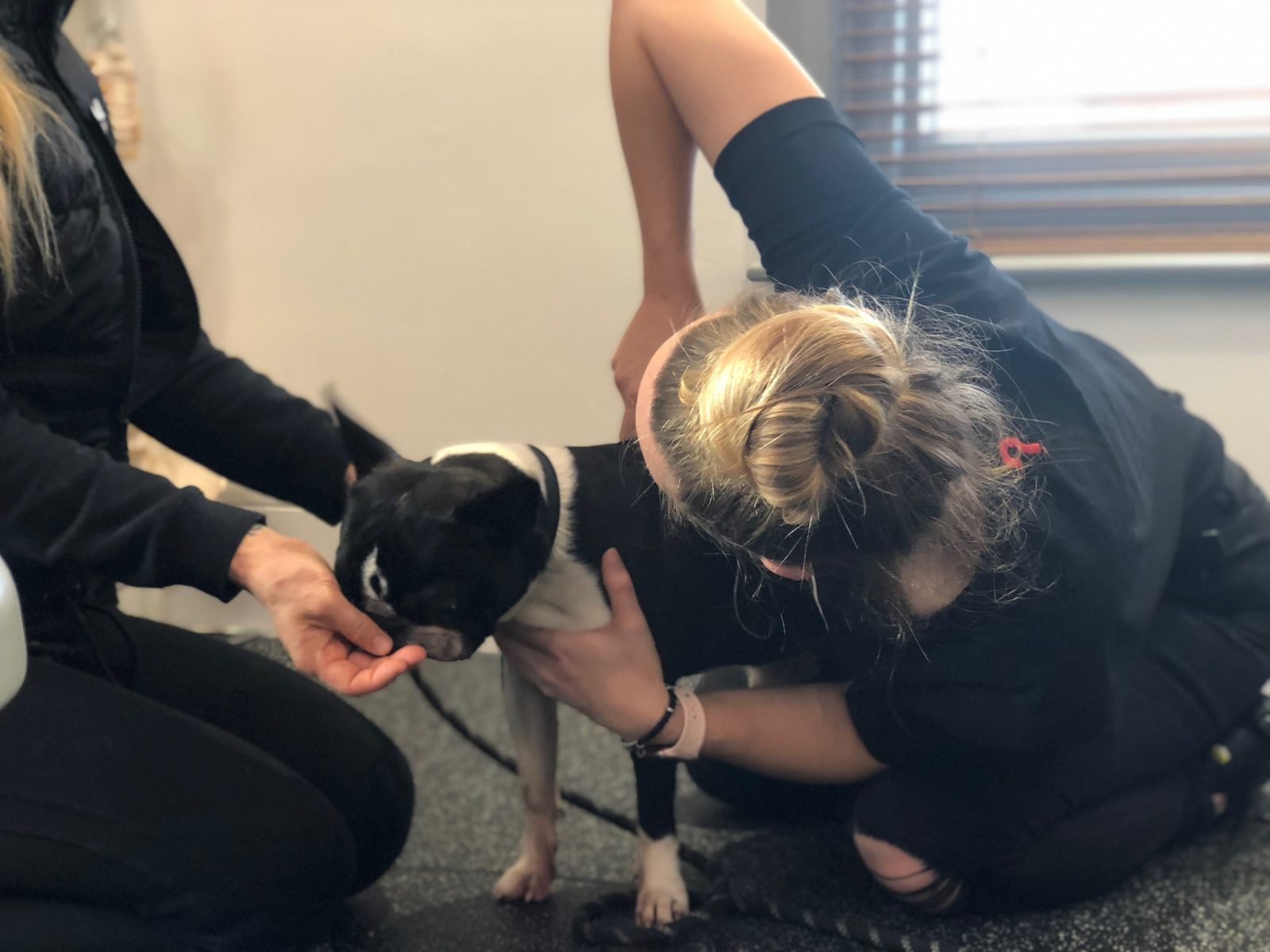
Like most of our four-legged friends, as soon as I began removing tension from the nervous system by adjusting her, Missy's face lit up. You can see how much better she moves in the first part of the video. However, I knew she could do even better, so I did another pelvis adjustment – and you can see her sprint off afterwards! As her owner says at the end of the video: "She has not moved like this for over 3 months."
Chiropractic treatment does not replace traditional veterinary medicine; however, it can provide treatment options for spinal problems as well as biomechanical-related musculoskeletal disorders.

How to recognise back problems
Dog handlers, trainers and owners can look out for signs of spinal problems in their dogs. Inspecting the spine before buying a dog is just as important as inspecting the legs.
Your own observations
Consider your dog's recent performance and demeanour:
- Has your dog's behaviour or performance changed recently?
- Is there unusual or fluctuating lameness?
- Is the dog reluctant to move?
- Has the handler or trainer noticed a change in the dog's motivation?
- Does the dog drag its feet, or are the nails worn down on one side?
Signs and symptoms
Not all behavioural changes are cause for concern, so this list will help you know what to watch for to keep your dog healthy and active:
- Pain when touched, stroked or lifted
- Reluctance or difficulty climbing stairs or jumping
- Difficulty getting up after lying down
- Negative changes in attitude or behaviour
- Altered sitting ("puppy sitting")
- Changes in eating or toileting
- Constantly licking or chewing paws
- Lameness or changes in gait
- Changes in performance
- Lying on one side
Examining mobility in your dog
Your dog should be able to move freely in all directions without tension.
- Using a treat if necessary, ask your dog to turn its head and neck to the side so that it touches its flank with its nose. Less mobility on one side than the other could indicate a problem in the cervical vertebrae (neck).
- Test the sideways movement of the spine by placing one hand on the spine and, with the other, carefully drawing the dog's tail towards you so that its back bends around your hand. Is one side stiffer than the other?
- Apply slight pressure to the back from above. The back should spring and swing easily and evenly. It should not feel stiff and hard.